
Who are the LEG Team?
The Lancaster Evaluation Group (LEG) is a dynamic, cross-institutional and interdisciplinary collective of researchers and practitioners based at Lancaster University, brought together by a shared commitment to advancing evaluative practice. Our team combines diverse expertise across psychology, design, management, education and evaluation methodology to generate thoughtful insights, support reflective practice, and contribute to the evolving culture of evaluation. Through collaborative research, seminars, reflections and community engagement, we strive to deepen understanding of how evaluations are designed, experienced and enacted across varied contexts inviting academics, practitioners and curious minds alike to join the conversation and explore evaluation with us.
Founding Members

Marina Bazhydai
Marina is a Lecturer in the Department of Psychology at Lancaster University and Director of the Active Learning Lab (ALL). Her research focuses on how children acquire, transform and share knowledge, with interests in curiosity, creativity, and child-led information seeking. She also conducts programme evaluations of child-focused interventions.

Pınar Ceyhan
Pınar is a design researcher, designer and educator. She serves as an International Lecturer in Design, at the Lancaster Institute for the Contemporary Arts, Lancaster University. Her current research focuses on evaluation design, evaluation methods, tools, and processes, as well as the role of designed experiences in cognition and meaning-making.

Elisavet Christou
Elisavet is a Lecturer in Management and Organisation Studies, at the department of Organisation, Work and Technology at Lancaster University Management School. She is an inter and trans-disciplinary researcher and educator and works within and across evaluation, design, computing, digital arts and digital media.

Beth Garrett
Beth is a Lecturer in the Morecambe Bay Curriculum, based in the Department of Educational Research at Lancaster University. Her work supports educators across Lancashire and Cumbria to embed sustainability, environment and place into curriculum design. She is involved in the North West Beach Schools network and is interested in how education can support engagement and wellbeing for both teachers and pupils.

Carys Nelkon
Carys specialises in developing programmes that support long-term social change. She works with communities and civic partners on the Morecambe Bay Curriculum, a place-based environmental education initiative. Previously, she helped establish Arts Emergency as a national charity and has experience across the charity, higher education and cultural sectors in the UK and Australia.
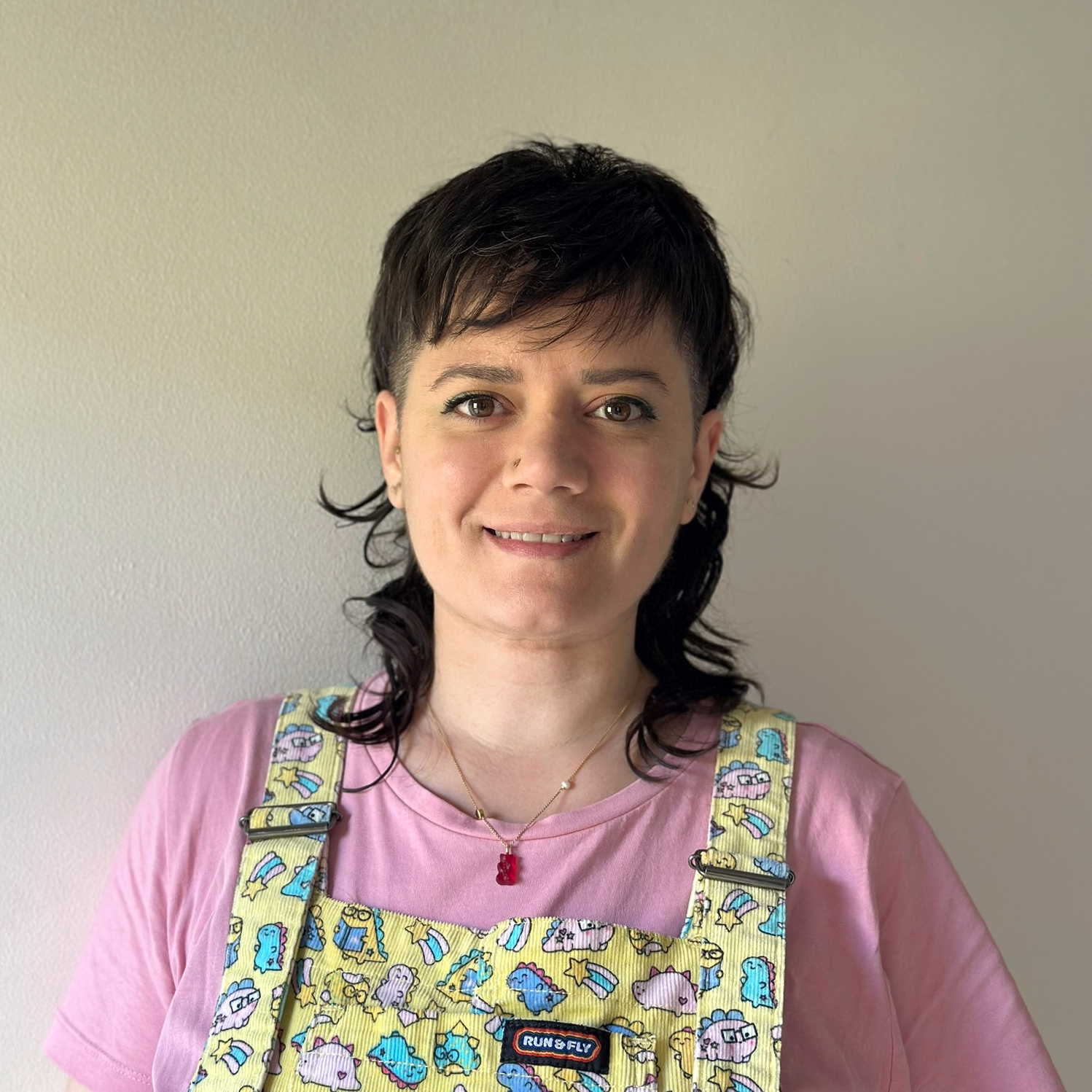
Violet Owen
Violet is a Senior Research Associate on the UKRI-funded Design Research Works fellowship. Her research sits at the intersection of technology, design and society, exploring how emerging technologies can support learning, creativity and sustainability. She works across generative AI education, immersive experiences and design-led research, and develops participatory, creative evaluation approaches as alternatives to traditional impact measurement.

Matthew Pawelski
Matthew is an Impact Development Manager working across Lancaster University’s Management School and Faculty of Health and Medicine. In previous roles he has supported impact development in the Faculties of Arts and Social Sciences and Science and Technology, and lead on evaluation strategy development and implementation in Widening Participation and Social Mobility. He has a PhD in History.

Murray Saunders
Murray is Emeritus Professor of Evaluation in Education and Work at Lancaster University. His research focuses on evaluative practice, primarily in education, including evaluations of higher education policy and practice in the UK and internationally. He adopts a social practice approach, understanding evaluation as a practice and examining how policies and programmes shape people’s practices within systems.
 Lancaster Evaluation Group